Automate workflows with
Integrations & MCPs.
Input
New Deal Activity Detected
Emit new event for each portfolio company or deal update in PitchBook.

AI Agent
AI Investment Intelligence & Deal Analytics
Generating deal memo

Destination
Waiting for agent to trigger actions
Input
New Deal Activity Detected
Emit new event for each portfolio company or deal update in PitchBook.
Integrations
MCP & App Combo's
All
Finance
Real Estate




Integrations
MCP & App Combo's
All
Finance
Real Estate













Integrations
MCP & App Combo's
All
Finance
Real Estate
We cut diligence time by 35% in the first quarter. Our analysts are reviewing 2x more deals.
Centerline
Building this in-house would've cost us $2M and 18 months. V7 had us live in six weeks.
Head of AI, Tech-Forward Insurance Brokerage
Our workflows were live in days, not months. The support is unlike anything we've seen from an enterprise vendor.
Alaris Acqusitions
Every serious fund will be running AI-powered diligence within two years. V7 is the only platform we'd trust with that.
Investment Firm Partner
We're processing hundreds of complex deal documents a week. What used to take a team now takes an afternoon.
Pinsent Masons
We replaced three separate tools — and cut our workflow costs by 40%. One platform does it all.
Real Estate Innovator
21x faster processing. 54% fewer errors. We now screen 5x more opportunities with the same team.
Star Mountain Capital ($5B alt asset firm)
We evaluated eight vendors. V7 wasn't close — it was the only one built for how private markets actually work.
AI-First Insurance Brokerage
Triggers, actions, and LLMs power the workflows
Plug your existing tools into Go. Just like Zapier, you can trigger actions across apps — but here every workflow is enhanced with AI.
Create a workflow…
Concierge
Create a workflow…
Concierge
No complex setup.
Just language.
Smart Output
Distribute results
Distribute results into downstream applications through the MCP, delivering context-aware formats and full audit trails.









OpenAi
OpenAi
OpenAi
OpenAi
OpenAi
OpenAi
OpenAi
Go distributes results
back to apps
via MCP,
Context-aware formats
and Full audit trails.
Smart Output
Distribute results
Distribute results into downstream applications through the MCP, delivering context-aware formats and full audit trails.
OpenAi
OpenAi
OpenAi
OpenAi
OpenAi
OpenAi
OpenAi
Go distributes results
back to apps
via MCP,
Context-aware formats
and Full audit trails.
1,400+ integrations
Choose, connect, and compose
Connect data from 1,400+ sources. Normalize and organize it into a workspace designed for clarity, security, and scale.
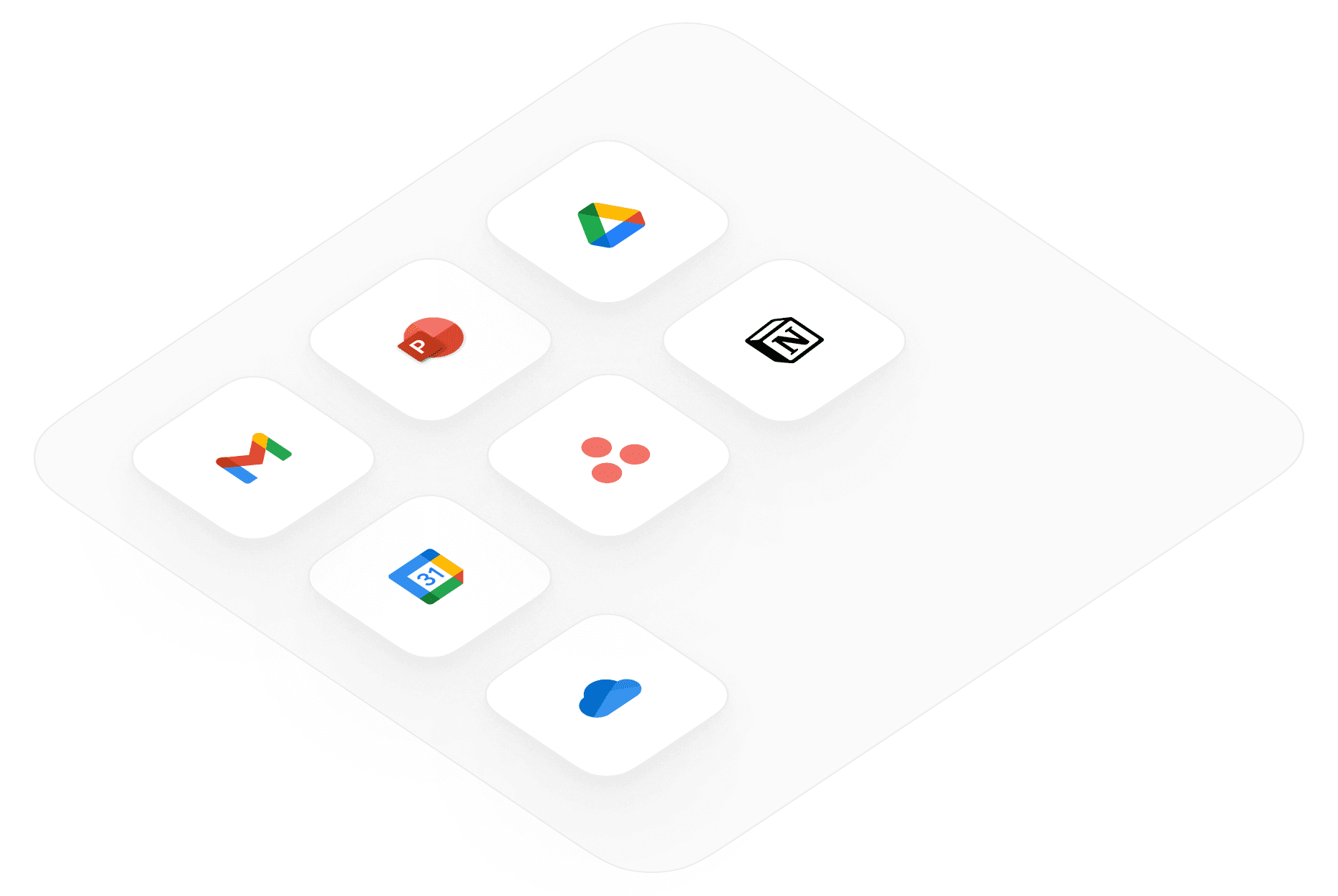
1,400+ integrations
Choose, connect, and compose
Connect data from 1,400+ sources. Normalize and organize it into a workspace designed for clarity, security, and scale.
Structured Hub
Normalize, classify, and organize
Normalize, classify, and organize incoming data into a governed workspace that supports auditability and role-based access.
OpenAi
Invoices
OpenAi
Records
OpenAi
Reports
OpenAi
Databases
OpenAi
API's
OpenAi
Docs
OpenAi
Mails
Structured Hub
Normalize, classify, and organize
Normalize, classify, and organize incoming data into a governed workspace that supports auditability and role-based access.
OpenAi
Invoices
OpenAi
Records
OpenAi
Reports
OpenAi
Databases
OpenAi
API's
OpenAi
Docs
OpenAi
Mails
Suggestions
Workspace recipes
Reuses proven steps from your org (e.g., Extract text, List items, Generate JSON) so you’re never starting from scratch.
Suggestions
See more
Send Message in channel
Get issues
Create account
Update status
Get projects
From V7
See more
Extract text
Extract a list of items
Generate JSON
Calculate number
Classify
Tag & Categorize
Generate slides
Transcribe audio
Search the web
All Integrations
Suggestions
Workspace recipes
Reuses proven steps from your org (e.g., Extract text, List items, Generate JSON) so you’re never starting from scratch.
Suggestions
See more
Send Message in channel
Get issues
Create account
Update status
Get projects
From V7
See more
Extract text
Extract a list of items
Generate JSON
Calculate number
Classify
Tag & Categorize
Generate slides
Transcribe audio
Search the web
All Integrations
Unified Intake
Securely connect enterprise systems
Securely connect enterprise systems and pull structured or unstructured data through the MCP, with compliance checks at the entry point.



Single secure gateway
Unified Intake
Securely connect enterprise systems
Securely connect enterprise systems and pull structured or unstructured data through the MCP, with compliance checks at the entry point.
Single secure gateway
A library of
A library of

Workflows
Workflows
ready to operate
ready to operate






Workflows
AI-enhanced workflows
Go beyond triggers and actions. Every integration can include multi-step reasoning.
Files
Workflows
AI-enhanced workflows
Go beyond triggers and actions. Every integration can include multi-step reasoning.
Files
Table-native
Table-native execution
Each row in your table is a workflow starting point, with agents acting directly on your data.
Company
Investors
1
2
3
4
5
Dell
Nvidia
GE
Oracle
Sodexo
Table-native
Table-native execution
Each row in your table is a workflow starting point, with agents acting directly on your data.
Company
Investors
1
2
3
4
5
Dell
Nvidia
GE
Oracle
Sodexo
Commands
Natural language commands
Skip complex zap configurations. Simply tell agents what to do.
Create a workflow…
Commands
Natural language commands
Skip complex zap configurations. Simply tell agents what to do.
Create a workflow…
Integrations
Enterprise-grade stack coverage
Connect with the tools your teams already rely on — CRM, email, docs, analytics, storage.





Integrations
Enterprise-grade stack coverage
Connect with the tools your teams already rely on — CRM, email, docs, analytics, storage.
Precision AI
AI for multi-billion dollar workflows
V7 built the Operating System for financial decisions. A new standard for institutional intelligence built for high-stakes financial decisions.


Time saving for invoice processing
95%
"We are looking for V7 Go and AI in general to be the beating heart of our company and our growth. It will make us more productive as a company, liaising with customers, automating tasks, even finding new work."
Productivity increase
35%
"We used V7 Go to automate our diligence process with data extraction and automated analysis. This led to a 35% productivity increase in just the first month of use."
Custom solution delivery
In hours, not weeks
"Partnering with V7 means bringing our toughest data challenges to a team that turns them into solutions in hours. Their Solutions Engineers have redefined what’s possible for our business."



Before
With V7
Result
M&A deal matching platform
Platform cost
Expensive
Platform cost
1/10th
Deploy time
20x faster
Financial diligence processing
Data entry
Manual
Data entry
Automated
Productivity gain
35% increase in 1st month
Purchase contract review
Per contract
45–60 min
Per contract
<15 min
Cost per contract
$1,000 → $100
Prospect research & qualification
Per prospect
~40 min
Per prospect
Automated
Manual work cut
90% less
Lease agreement rating
Per agreement
~60 min
Per agreement
~6 min
Time reduction
90% less
Claims assessment
Daily throughput
~45 claims
Daily throughput
+60 claims
Throughput gain
33% capacity increase
Credit fund cuts earnings monitoring from hours to minutes
200+
Earnings calls processed per year
Long/short equity fund accelerates investment decisions with richer data
3×
More data sources in each investment decision
Global PE firm expands deal coverage without adding headcount
137%
Increase in deals screened annually
Enterprise-grade
security.
Your data stays yours—always. Work with one of the few AI companies that never trains on your data.
No training on your data
Encrypted end-to-end
Audited and penetration-tested
Fine-grained access controls
Inhouse security team
Audit logs across every workflow
Time saving for invoice processing
95%
"We are looking for V7 Go and AI in general to be the beating heart of our company and our growth. It will make us more productive as a company, liaising with customers, automating tasks, even finding new work."
Productivity increase
35%
"We used V7 Go to automate our diligence process with data extraction and automated analysis. This led to a 35% productivity increase in just the first month of use."
Custom solution delivery
In hours, not weeks
"Partnering with V7 means bringing our toughest data challenges to a team that turns them into solutions in hours. Their Solutions Engineers have redefined what’s possible for our business."
Before
With V7
Result
M&A deal matching platform
Platform cost
Expensive
Platform cost
1/10th
Deploy time
20x faster
Financial diligence processing
Data entry
Manual
Data entry
Automated
Productivity gain
35% increase in 1st month
Purchase contract review
Per contract
45–60 min
Per contract
<15 min
Cost per contract
$1,000 → $100
Prospect research & qualification
Per prospect
~40 min
Per prospect
Automated
Manual work cut
90% less
Lease agreement rating
Per agreement
~60 min
Per agreement
~6 min
Time reduction
90% less
Claims assessment
Daily throughput
~45 claims
Daily throughput
+60 claims
Throughput gain
33% capacity increase
Credit fund cuts earnings monitoring from hours to minutes
200+
Earnings calls processed per year
Long/short equity fund accelerates investment decisions with richer data
3×
More data sources in each investment decision
Global PE firm expands deal coverage without adding headcount
137%
Increase in deals screened annually
Enterprise-grade
security.
Your data stays yours—always. Work with one of the few AI companies that never trains on your data.
No training on your data
Encrypted end-to-end
Audited and penetration-tested
Fine-grained access controls
Inhouse security team
Audit logs across every workflow
Time saving for invoice processing
95%
"We are looking for V7 Go and AI in general to be the beating heart of our company and our growth. It will make us more productive as a company, liaising with customers, automating tasks, even finding new work."
Productivity increase
35%
"We used V7 Go to automate our diligence process with data extraction and automated analysis. This led to a 35% productivity increase in just the first month of use."
Custom solution delivery
In hours, not weeks
"Partnering with V7 means bringing our toughest data challenges to a team that turns them into solutions in hours. Their Solutions Engineers have redefined what’s possible for our business."
Before
With V7
Result
M&A deal matching platform
Platform cost
Expensive
Platform cost
1/10th
Deploy time
20x faster
Financial diligence processing
Data entry
Manual
Data entry
Automated
Productivity gain
35% increase in 1st month
Purchase contract review
Per contract
45–60 min
Per contract
<15 min
Cost per contract
$1,000 → $100
Prospect research & qualification
Per prospect
~40 min
Per prospect
Automated
Manual work cut
90% less
Lease agreement rating
Per agreement
~60 min
Per agreement
~6 min
Time reduction
90% less
Claims assessment
Daily throughput
~45 claims
Daily throughput
+60 claims
Throughput gain
33% capacity increase
Credit fund cuts earnings monitoring from hours to minutes
200+
Earnings calls processed per year
Long/short equity fund accelerates investment decisions with richer data
3×
More data sources in each investment decision
Global PE firm expands deal coverage without adding headcount
137%
Increase in deals screened annually
Enterprise-grade
security.
Your data stays yours—always. Work with one of the few AI companies that never trains on your data.
No training on your data
Encrypted end-to-end
Audited and penetration-tested
Fine-grained access controls
Inhouse security team
Audit logs across every workflow
Have questions?
Find answers.
Any more questions?
How does V7 Go differ from tools like Zapier or Make?
Zapier and Make are useful when you want apps to react to events in each other. They’re built around triggers and simple data handoffs. V7 Go sits at a different layer. It focuses on document-heavy workflows where the outcome depends on what’s inside the file. Its agents can read a document, extract what matters, use information stored in your workspace, and then act inside your connected apps. In practice, it means Zapier or Make can still be part of your stack, but the purpose of each tool is different. For example, if Zapier handles the wiring, V7 Go can handles the logic that depends on the contents of the document.
How do I connect integrations to V7 Go?
V7 Go includes built-in connectors that link to a growing library of more than four hundred applications. These connectors work through triggers and skills. Triggers are events happening inside external apps that V7 Go can listen to, so when something changes in that app, an agent can start working. Skills are the actions V7 Go can take inside those external apps, whether that’s retrieving information, updating data, or using some feature of the app during a workflow.
Beyond the connector library, the platform can also link to any software that exposes an API endpoint. If an app supports HTTP requests, V7 Go can talk to it through webhooks or API calls. This is often the preferred method for teams working with industry-specific or niche tools that will never have an off-the-shelf integration. Setting these up usually only involves pointing V7 Go at the right endpoint and passing the credentials the system requires.
How does pricing work for integrations?
V7 Go includes built-in connectors that link to a growing library of more than four hundred applications. These connectors work through triggers and skills. Triggers are events happening inside external apps that V7 Go can listen to, so when something changes in that app, an agent can start working. Skills are the actions V7 Go can take inside those external apps, whether that’s retrieving information, updating data, or using some feature of the app during a workflow.
Beyond the connector library, the platform can also link to any software that exposes an API endpoint. If an app supports HTTP requests, V7 Go can talk to it through webhooks or API calls. This is often the preferred method for teams working with industry-specific or niche tools that will never have an off-the-shelf integration. Setting these up usually only involves pointing V7 Go at the right endpoint and passing the credentials the system requires.
What can V7 Go’s agents do once integrations are connected?
Once integrations are active, the agents can work end-to-end across documents and external systems. They can read files, extract structured information, and use additional context from the documents stored in your workspace. They can also perform actions inside the apps you’ve connected, whether that’s updating a record, retrieving additional data, sending a message, or running a task that depends on the contents of the document. You can design workflows where an incoming file automatically triggers an agent, the agent completes the work, and the results show up exactly where your team needs them.
What are Knowledge Hubs, and how do they relate to integrations?
Knowledge Hubs are where your documents live inside V7 Go. When you sync files from places like Google Drive or SharePoint, or upload them directly, they’re not just stored—they’re indexed. That indexing is important, because it means the AI can work with a large library of documents and decide, on its own, which ones are relevant to the task at hand. If an agent needs background information, a definition, a policy, a previous contract, or anything else buried in your files, it can pull the right pieces as it works. This gives your workflows the ability to reference your institutional knowledge without having to hard-code every rule or document location.
Have questions?
Find answers.
Any more questions?
How does V7 Go differ from tools like Zapier or Make?
Zapier and Make are useful when you want apps to react to events in each other. They’re built around triggers and simple data handoffs. V7 Go sits at a different layer. It focuses on document-heavy workflows where the outcome depends on what’s inside the file. Its agents can read a document, extract what matters, use information stored in your workspace, and then act inside your connected apps. In practice, it means Zapier or Make can still be part of your stack, but the purpose of each tool is different. For example, if Zapier handles the wiring, V7 Go can handles the logic that depends on the contents of the document.
How do I connect integrations to V7 Go?
V7 Go includes built-in connectors that link to a growing library of more than four hundred applications. These connectors work through triggers and skills. Triggers are events happening inside external apps that V7 Go can listen to, so when something changes in that app, an agent can start working. Skills are the actions V7 Go can take inside those external apps, whether that’s retrieving information, updating data, or using some feature of the app during a workflow.
Beyond the connector library, the platform can also link to any software that exposes an API endpoint. If an app supports HTTP requests, V7 Go can talk to it through webhooks or API calls. This is often the preferred method for teams working with industry-specific or niche tools that will never have an off-the-shelf integration. Setting these up usually only involves pointing V7 Go at the right endpoint and passing the credentials the system requires.
How does pricing work for integrations?
V7 Go includes built-in connectors that link to a growing library of more than four hundred applications. These connectors work through triggers and skills. Triggers are events happening inside external apps that V7 Go can listen to, so when something changes in that app, an agent can start working. Skills are the actions V7 Go can take inside those external apps, whether that’s retrieving information, updating data, or using some feature of the app during a workflow.
Beyond the connector library, the platform can also link to any software that exposes an API endpoint. If an app supports HTTP requests, V7 Go can talk to it through webhooks or API calls. This is often the preferred method for teams working with industry-specific or niche tools that will never have an off-the-shelf integration. Setting these up usually only involves pointing V7 Go at the right endpoint and passing the credentials the system requires.
What can V7 Go’s agents do once integrations are connected?
Once integrations are active, the agents can work end-to-end across documents and external systems. They can read files, extract structured information, and use additional context from the documents stored in your workspace. They can also perform actions inside the apps you’ve connected, whether that’s updating a record, retrieving additional data, sending a message, or running a task that depends on the contents of the document. You can design workflows where an incoming file automatically triggers an agent, the agent completes the work, and the results show up exactly where your team needs them.
What are Knowledge Hubs, and how do they relate to integrations?
Knowledge Hubs are where your documents live inside V7 Go. When you sync files from places like Google Drive or SharePoint, or upload them directly, they’re not just stored—they’re indexed. That indexing is important, because it means the AI can work with a large library of documents and decide, on its own, which ones are relevant to the task at hand. If an agent needs background information, a definition, a policy, a previous contract, or anything else buried in your files, it can pull the right pieces as it works. This gives your workflows the ability to reference your institutional knowledge without having to hard-code every rule or document location.
Have questions?
Find answers.
How does V7 Go differ from tools like Zapier or Make?
Zapier and Make are useful when you want apps to react to events in each other. They’re built around triggers and simple data handoffs. V7 Go sits at a different layer. It focuses on document-heavy workflows where the outcome depends on what’s inside the file. Its agents can read a document, extract what matters, use information stored in your workspace, and then act inside your connected apps. In practice, it means Zapier or Make can still be part of your stack, but the purpose of each tool is different. For example, if Zapier handles the wiring, V7 Go can handles the logic that depends on the contents of the document.
How do I connect integrations to V7 Go?
V7 Go includes built-in connectors that link to a growing library of more than four hundred applications. These connectors work through triggers and skills. Triggers are events happening inside external apps that V7 Go can listen to, so when something changes in that app, an agent can start working. Skills are the actions V7 Go can take inside those external apps, whether that’s retrieving information, updating data, or using some feature of the app during a workflow.
Beyond the connector library, the platform can also link to any software that exposes an API endpoint. If an app supports HTTP requests, V7 Go can talk to it through webhooks or API calls. This is often the preferred method for teams working with industry-specific or niche tools that will never have an off-the-shelf integration. Setting these up usually only involves pointing V7 Go at the right endpoint and passing the credentials the system requires.
How does pricing work for integrations?
V7 Go includes built-in connectors that link to a growing library of more than four hundred applications. These connectors work through triggers and skills. Triggers are events happening inside external apps that V7 Go can listen to, so when something changes in that app, an agent can start working. Skills are the actions V7 Go can take inside those external apps, whether that’s retrieving information, updating data, or using some feature of the app during a workflow.
Beyond the connector library, the platform can also link to any software that exposes an API endpoint. If an app supports HTTP requests, V7 Go can talk to it through webhooks or API calls. This is often the preferred method for teams working with industry-specific or niche tools that will never have an off-the-shelf integration. Setting these up usually only involves pointing V7 Go at the right endpoint and passing the credentials the system requires.
What can V7 Go’s agents do once integrations are connected?
Once integrations are active, the agents can work end-to-end across documents and external systems. They can read files, extract structured information, and use additional context from the documents stored in your workspace. They can also perform actions inside the apps you’ve connected, whether that’s updating a record, retrieving additional data, sending a message, or running a task that depends on the contents of the document. You can design workflows where an incoming file automatically triggers an agent, the agent completes the work, and the results show up exactly where your team needs them.
What are Knowledge Hubs, and how do they relate to integrations?
Knowledge Hubs are where your documents live inside V7 Go. When you sync files from places like Google Drive or SharePoint, or upload them directly, they’re not just stored—they’re indexed. That indexing is important, because it means the AI can work with a large library of documents and decide, on its own, which ones are relevant to the task at hand. If an agent needs background information, a definition, a policy, a previous contract, or anything else buried in your files, it can pull the right pieces as it works. This gives your workflows the ability to reference your institutional knowledge without having to hard-code every rule or document location.


Ready to build your automations
Ready to build your automations